
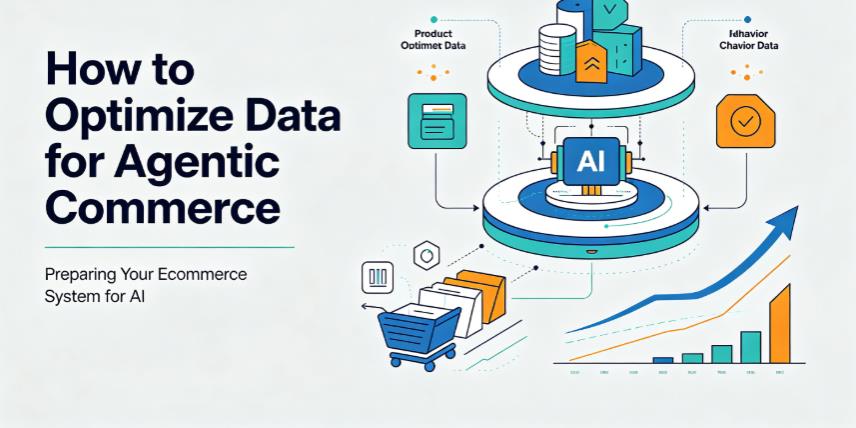
The global ecommerce landscape is undergoing an irreversible paradigm shift, moving beyond traditional click-based shopping and static digital storefronts into the era of agentic commerce. Unlike conventional ecommerce automation that relies on rule-based workflows and manual human oversight, agentic commerce leverages autonomous AI shopping agents to execute end-to-end retail operations—from personalized customer journey orchestration and real-time dynamic pricing to inventory forecasting, automated product recommendation, and post-purchase customer support resolution. These intelligent AI agents can independently interpret consumer intent, analyze market competition, adjust retail strategies in real time, and deliver hyper-targeted shopping experiences at scale, fundamentally redefining how modern retailers operate, engage audiences, and drive revenue growth.
However, the performance, accuracy, and reliability of every AI agent in commercial environments are entirely dependent on one critical foundation: high-quality, structured, and unified ecommerce data. Advanced artificial intelligence models, machine learning algorithms, and autonomous retail agents cannot overcome flawed data infrastructure. For mid-market and enterprise retailers leveraging AI-powered ecommerce automation, outdated legacy platforms, fragmented data silos, inconsistent product information management, and unstandardized customer behavioral data have become the silent bottlenecks derailing AI transformation initiatives. Countless retail brands invest millions in AI retail tools, intelligent shopping bots, and automated commerce systems only to face failed pilot programs, unreliable automation outputs, inconsistent customer experiences, and costly iterative rework—all stemming from unoptimized foundational data.
This comprehensive guide explores the core correlation between data quality and agentic commerce performance, dissects the most prevalent data pitfalls in legacy ecommerce ecosystems, and delivers actionable, enterprise-grade best practices for data cleansing, schema standardization, data migration, and AI-centric data structuring. By implementing the data optimization frameworks outlined below, retailers can build a robust, scalable data foundation to unlock the full potential of autonomous retail AI, future-proof their ecommerce systems, and gain a sustainable competitive edge in the rapidly evolving agentic commerce marketplace.
The Inseparable Link Between Data Quality and Agentic Commerce Effectiveness
Agentic commerce distinguishes itself from traditional ecommerce automation through its core capability of intent-driven autonomous decision-making. Rule-based legacy ecommerce tools only execute pre-programmed commands, while modern AI agents actively analyze multi-dimensional commerce data to understand consumer preferences, predict purchase behavior, optimize operational workflows, and resolve complex retail scenarios without human intervention. This advanced functionality creates a non-negotiable dependency on high-fidelity, comprehensive, and machine-readable data sets—making data quality the single greatest determinant of AI commerce ROI.
High-value AI retail personalization and autonomous operational efficiency are impossible to achieve with fragmented, outdated, or inconsistent data. For example, an AI agent tasked with delivering personalized product recommendations will generate irrelevant or inaccurate suggestions if product attribute data is incomplete, customer profile data is siloed, or behavioral tracking data is unstructured. Similarly, autonomous dynamic pricing agents cannot accurately analyze competitor pricing trends, demand fluctuations, and inventory levels to adjust pricing strategies if backend sales data, inventory data, and market data are disconnected or inconsistent.
Industry data from leading retail technology analysts confirms that 78% of failed AI ecommerce pilots stem directly from poor data infrastructure, rather than flawed AI algorithm design or tool limitations. A prominent case in point is a 2025 mid-market DTC home goods brand that invested $1.2 million in enterprise-grade agentic commerce tools to automate cross-selling, upselling, and customer segmentation. The brand’s legacy ecommerce system stored product data in three disconnected databases, customer purchase history in a separate CRM platform, and on-site behavioral data in unstructured log files. Despite deploying state-of-the-art AI agents, the system failed to generate accurate customer segments, delivered generic product recommendations, and produced inconsistent promotional triggers. After six months of underperformance, internal audits revealed that over 42% of product SKU data contained missing attributes, duplicate entries, and inconsistent categorization—rendering the AI agent’s core analytical capabilities useless.
This case illustrates a critical industry truth: agentic commerce is not a standalone AI solution but a data-first operational model. Every autonomous action taken by retail AI agents—from personalized journey customization and real-time inventory sync to automated customer query resolution and demand forecasting—relies on clean, standardized, and integrated data. Retailers must prioritize data optimization as the foundational step of AI transformation, rather than treating data remediation as a secondary afterthought. Only when ecommerce data is fully structured, unified, and machine-readable can AI agents deliver reliable, scalable, and revenue-driving business outcomes.
Prevalent Data Pitfalls in Legacy Ecommerce Systems Blocking AI Adoption
Most established retailers operate on legacy ecommerce infrastructures built for traditional transactional commerce, not AI-powered agentic operations. These legacy systems were designed to process basic online transactions, store static product information, and track surface-level customer data, lacking the structural flexibility and data standardization required for machine learning and autonomous AI decision-making. Below are the most damaging data pitfalls in legacy ecommerce ecosystems that hinder agentic commerce implementation, along with real-world industry examples and risk analysis.
Data Silos and Fragmented Database Architecture
Data silos represent the most pervasive and costly barrier to agentic commerce optimization. Legacy ecommerce stacks typically consist of disjointed platforms including on-site storefront systems, independent inventory management software, standalone CRM tools, third-party logistics platforms, and separate marketing analytics tools. Each system stores critical commerce data in isolated databases with no unified integration layer, creating fragmented data ecosystems that prevent AI agents from accessing a holistic view of business and customer data.
For AI agents to make intelligent autonomous decisions, they require cross-functional data visibility across product inventory, customer profiles, purchase history, on-site behavior, marketing engagement, and supply chain operations. Siloed data forces AI systems to operate on partial information, leading to biased analysis, inaccurate predictions, and flawed automation decisions. A 2026 retail tech survey of enterprise DTC brands found that retailers with three or more disconnected commerce data silos experience a 63% lower AI automation accuracy rate for personalization and inventory forecasting use cases.
A typical enterprise example is a national apparel retail chain with over 500,000 SKUs and 12 million active customer accounts. The brand’s legacy infrastructure separated product catalog data in its ERP system, customer behavioral data in Google Analytics, post-purchase review data in a third-party review platform, and repeat purchase data in its CRM. When deploying AI agents for personalized shopping journey automation, the system could not correlate a customer’s browsing behavior, size preference, purchase history, and product review preferences. The result was generic, one-size-fits-all product recommendations that reduced click-through rates by 18% and failed to improve conversion rates, directly undermining the brand’s AI investment.
Inconsistent Product Catalog Data and Unstandardized SKU Attributes
Product catalog integrity is the backbone of agentic commerce, as nearly all retail AI agent functions revolve around product data analysis, matching, and recommendation. Legacy ecommerce systems often suffer from unregulated product data entry, inconsistent attribute tagging, duplicate SKU entries, and non-standard categorization frameworks. Unlike human merchandisers who can interpret inconsistent product descriptions and variable formatting, AI agents rely entirely on standardized, structured, and uniform data fields to identify, classify, and match products to consumer intent.
Common catalog flaws include inconsistent product title formatting, missing core attribute fields (material, size, dimensions, warranty, compatibility), duplicate SKUs for identical products, mismatched product categorizations across sales channels, and unstructured free-text descriptions lacking standardized key-value pairs. These inconsistencies create severe barriers for AI-driven product matching, recommendation algorithms, and shopping agent functionality. Industry benchmarks show that retail catalogs with more than 10% inconsistent SKU data experience a 40% reduction in AI recommendation relevance and a 35% increase in automated merchandising errors.
A notable industry case involves a consumer electronics ecommerce retailer attempting to deploy AI agents for cross-channel product sync and automated merchandising. The brand’s legacy catalog allowed merchandising teams to input product data with flexible formatting, resulting in identical smartphone accessories being categorized under three different taxonomy labels, with varying attribute fields for compatibility, voltage, and material. The AI agent could not group identical products, leading to duplicate product listings across Amazon, Shopify, and Walmart marketplaces, suppressed organic search visibility, and automated promotional errors that cost the brand over $280,000 in wasted ad spend and lost monthly revenue.
Outdated, Redundant, and Low-Fidelity Historical Data
Legacy ecommerce databases accumulate years of unmaintained historical data, including outdated product listings, inactive customer accounts, discontinued SKUs, redundant transaction records, and obsolete marketing data. Without regular data cleansing and archiving protocols, this low-quality historical data pollutes active datasets and skews AI machine learning models. AI agents learn and optimize from historical commerce patterns, meaning corrupted, outdated, or redundant data leads to flawed model training, biased predictive analysis, and unreliable autonomous decisions.
Many retailers make the critical mistake of migrating all historical data during system upgrades without filtering or cleansing, carrying forward decades of data errors into new AI-enabled platforms. This practice creates persistent model bias and performance degradation that requires extensive rework to resolve. For AI-powered demand forecasting and inventory automation tools, outdated seasonal data, discontinued product data, and obsolete market trend data directly reduce forecasting accuracy, leading to overstocking, stockouts, and inefficient supply chain allocation.
Unstructured Behavioral and Customer Data
Modern agentic commerce relies heavily on customer behavioral data to power personalized shopping journeys, intent prediction, and automated customer engagement. Legacy ecommerce systems typically capture behavioral data in unstructured log files, raw clickstream data, and unorganized session records, rather than structuring data into standardized customer journey attributes. Unstructured data cannot be effectively parsed, analyzed, or leveraged by machine learning models, limiting AI agents’ ability to understand nuanced consumer intent and deliver personalized experiences.
Critical behavioral data points including cart abandonment triggers, product dwell time, search query patterns, cross-page navigation behavior, and post-purchase feedback are often stored in unstructured formats in legacy systems. Without standardized data mapping and structuring, AI agents cannot identify behavioral patterns, segment high-intent customers, or automate targeted re-engagement strategies—stunting the core value of agentic commerce personalization capabilities.
Enterprise-Grade Best Practices for Ecommerce Data Cleansing and Migration
To eliminate legacy data pitfalls and build a AI-ready ecommerce data foundation, retailers need a systematic, risk-mitigated approach to data cleansing, standardization, mapping, and migration. Unlike basic data cleanup for traditional ecommerce operations, agentic commerce data optimization requires machine-first structuring, cross-channel standardization, and scalable data governance frameworks. The following best practices are tailored for AI ecommerce data migration and long-term data quality maintenance, minimizing transformation risks while maximizing AI agent performance potential.
Structured Data Auditing and Gap Analysis Prior to Migration
Before initiating any data migration or optimization project, retailers must conduct a comprehensive end-to-end audit of all existing ecommerce data assets to identify errors, gaps, inconsistencies, and redundancy. A targeted AI-focused audit prioritizes data fields critical for agentic commerce functionality, including product SKU attributes, customer profile parameters, transactional metrics, behavioral tracking fields, inventory sync data, and policy metadata (shipping, returns, warranties).
The audit process should quantify key data quality metrics including SKU completeness rate, duplicate entry volume, attribute standardization rate, cross-channel data consistency, and inactive data volume. Retailers should establish clear benchmark targets aligned with AI operational needs, such as 100% core SKU attribute completeness for top-revenue SKUs, below 1% duplicate entry rate, and full cross-channel taxonomy alignment. This baseline audit creates a prioritized remediation roadmap, ensuring teams address high-impact data flaws that directly hinder AI agent performance first.
Rule-Based Data Cleansing and Redundancy Elimination
Post-audit, retailers must execute structured data cleansing to remove corrupted, outdated, and redundant data while standardizing inconsistent formatting. For product catalog data, this process includes merging duplicate SKUs, archiving discontinued product entries, filling missing core attributes, and unifying title and description formatting across all sales channels. For customer data, cleansing involves removing inactive accounts, standardizing contact and demographic fields, and eliminating duplicate customer profiles created from cross-device shopping behavior.
To ensure scalability and consistency, retailers should implement automated rule-based cleansing workflows rather than manual spreadsheet edits. Custom cleansing rules can standardize product attribute values (color, size, material, compatibility), unify categorization taxonomies aligned with Google Product Category (GPC) standards, and flag anomalous transaction or behavioral data for manual review. Automated cleansing reduces human error, cuts operational costs, and ensures data consistency at enterprise scale—critical for reliable AI model training.
AI-Centric Data Mapping and Schema Standardization
The single most impactful step in preparing data for agentic commerce is implementing machine-readable, AI-optimized data schema and cross-system data mapping. Legacy ecommerce data schemas are designed for human backend management and basic transaction processing, not AI algorithmic analysis. Modern agentic commerce requires standardized, structured schemas with consistent key-value pairs, hierarchical taxonomy, and machine-readable metadata that AI agents can parse and interpret without manual intervention.
Enterprise retailers should adopt industry-standard structured data frameworks including JSON-LD product schema, standardized GPC taxonomy, and unified customer data platform (CDP) field mapping. This standardization ensures seamless data interoperability across ecommerce storefronts, CRM systems, inventory management tools, and AI agent platforms. Critical schema optimizations include mandatory core product attributes, timestamped pricing and availability fields, machine-readable shipping and return policy metadata, and hierarchical product categorization with three-plus level taxonomy depth.
A leading outdoor gear DTC brand implemented this schema standardization framework during its 2025 AI transformation initiative, standardizing over 80,000 SKUs with unified attribute schemas and GPC-aligned categorization. Post-implementation, the brand’s AI recommendation agent achieved a 41% improvement in suggestion relevance, cart abandonment automation reduced exit rates by 22%, and overall AI-driven revenue contribution increased by 34% within eight months. This case validates that schema standardization directly translates to measurable agentic commerce ROI.
Risk-Mitigated Phased Data Migration Strategy
Full-scale data migration for enterprise ecommerce systems carries inherent risks including data loss, system downtime, and operational disruption. To minimize migration risk while preserving data integrity for AI adoption, retailers should implement a phased migration approach rather than a full one-time system switch. The phased strategy prioritizes high-priority data sets critical for core AI agent functions first, including top-tier revenue SKU data, active customer profile data, and recent behavioral transaction data.
The migration workflow begins with cleansing and migrating high-value active data, followed by standardized historical data archiving, and final integration of secondary operational data sets. Throughout the process, retailers maintain dual-system operation to avoid business disruption, conduct post-migration data validation audits, and test AI agent functionality incrementally. This method ensures data quality is preserved at every stage, prevents corrupted legacy data from contaminating new AI systems, and allows teams to resolve integration issues before full-scale agentic commerce deployment.
Structuring Core Data Categories for Maximum AI Agent Performance
Agentic commerce AI agents rely on three core data categories to execute autonomous retail operations: product data, customer data, and behavioral data. Simply cleaning legacy data is insufficient for long-term AI success—retailers must restructure these three data types specifically for machine learning analysis and autonomous decision-making. Below is a detailed breakdown of AI-optimized structuring strategies for each core data category, paired with industry use cases and performance optimization tactics tailored for autonomous AI retail operations.
AI-Optimized Product Data Structuring
Product data is the foundational dataset for nearly all agentic commerce functions, including automated merchandising, AI product recommendations, dynamic pricing, cross-channel listing automation, and consumer intent matching. AI-ready product data requires full attribute completeness, standardized taxonomy, multi-dimensional contextual metadata, and real-time update synchronization. Unlike traditional product data optimization focused on human readability and search ranking, AI product structuring prioritizes machine interpretability and predictive analytical value.
Key optimization tactics include expanding structured product attribute sets beyond basic title and description fields to include technical specifications, use-case scenarios, compatibility parameters, material composition, warranty details, and comparative differentiators versus competitor products. All attributes must be formatted as standardized key-value pairs rather than unstructured free text to enable AI parsing and pattern recognition. Retailers should also implement real-time data sync protocols to update pricing, inventory availability, sale windows, and shipping parameters at minimum four-hour intervals, eliminating stale product data that misleads AI agents.
A premium beauty ecommerce brand leveraged this structuring strategy to optimize its catalog of 12,000+ SKUs for agentic commerce. The brand expanded structured product attributes to include skin type compatibility, ingredient benefits, scent profiles, and usage frequency guidelines, all standardized into machine-readable fields. Post-optimization, the brand’s AI shopping agent could autonomously answer complex consumer product questions, deliver hyper-personalized skincare routine recommendations, and automate targeted product bundling. The result was a 29% increase in average order value and a 36% rise in AI-assisted conversion rates within six months.
Unified Customer Data Structuring for AI Personalization
Customer data powers AI-driven personalized journey orchestration, audience segmentation, retention automation, and targeted marketing optimization. Legacy customer data is often siloed, duplicated, and limited to basic demographic and transactional fields, failing to capture the nuanced customer insights required for autonomous AI personalization. AI-ready customer data requires unified single-customer profiles, multi-dimensional behavioral and transactional attributes, and contextual lifecycle data.
Retailers must consolidate siloed customer data from CRM platforms, on-site analytics, social commerce channels, and post-purchase support systems into a centralized customer data platform (CDP) to create unique, unified customer profiles. Each profile should integrate demographic data, purchase history, repeat purchase frequency, product preference patterns, cart abandonment behavior, support interaction history, and channel engagement metrics. Structuring customer data into lifecycle stages (new visitor, first-time buyer, repeat customer, loyal subscriber, at-risk churn) also enables AI agents to automate stage-specific engagement strategies.
A fashion retail enterprise implemented unified customer data structuring for its 15 million global customer profiles, eliminating duplicate accounts and integrating cross-channel behavioral data. The optimized customer dataset allowed AI agents to autonomously segment audiences by style preference, price sensitivity, seasonal purchase behavior, and size fit preferences. The automated AI personalization system delivered tailored homepage experiences, customized email re-engagement workflows, and targeted on-site popups, driving a 25% reduction in churn rate and a 31% improvement in personalized campaign conversion rates.
Behavioral Data Structuring for Intent-Driven AI Automation
Behavioral data is the most predictive dataset for agentic commerce, enabling AI agents to interpret real-time consumer intent, predict purchase likelihood, and automate proactive shopping journey adjustments. Legacy behavioral data collection typically captures surface-level clickstream metrics without structured intent categorization, limiting AI predictive power. AI-optimized behavioral data structuring involves tagging and standardizing every on-site interaction with intent-based metadata, enabling machine learning models to identify high-intent purchase patterns and behavioral anomalies.
Key structured behavioral data points include search query intent classification, product page dwell time by category, cart addition/removal behavior, checkout step abandonment triggers, cross-category browsing patterns, and repeat product view frequency. All behavioral data should be timestamped, channel-tagged, and linked to unique customer profiles to enable holistic journey analysis. By structuring behavioral data in this way, AI agents can autonomously identify high-intent shoppers, deploy real-time promotional incentives, resolve journey friction points, and predict future purchase behavior with high accuracy.
Mitigating Long-Term AI Commerce Risks With Sustained Data Governance
Many retail brands achieve short-term data optimization success only to experience gradual AI performance degradation due to lack of sustained data governance. Agentic commerce systems require continuous data quality maintenance, real-time monitoring, and iterative optimization to sustain reliable autonomous operation. Static one-time data overhauls cannot accommodate evolving product catalogs, changing customer behavior patterns, and expanding AI agent functionality.
Building a long-term AI-ready data governance framework involves establishing automated data quality monitoring protocols, scheduled recurring data audits, standardized internal data entry workflows, and cross-team data accountability systems. Retailers should implement key performance indicators to track ongoing data health, including SKU attribute completeness rate, feed acceptance rate, duplicate data volume, and cross-system sync accuracy. Maintaining a feed disapproval rate below 1% for active revenue-generating SKUs serves as a critical benchmark for sustained agentic commerce data quality.
Additionally, brands must align internal merchandising, IT, and marketing teams on AI-first data standards to prevent legacy data inconsistencies from reoccurring. Employee training on standardized data entry, machine-readable schema requirements, and agentic commerce data best practices ensures long-term data integrity. For enterprise-scale operations, automated data governance tools can flag data anomalies in real time, enforce standardization rules, and generate monthly data quality reports for continuous optimization.
Data Optimization Is the Foundation of Agentic Commerce Success
Agentic commerce represents the future of scalable, intelligent retail operations, offering unprecedented opportunities for automated personalization, operational efficiency, and revenue growth. However, these transformative benefits remain inaccessible to retailers burdened by legacy data flaws, fragmented data infrastructure, and unoptimized data structuring. As AI shopping agents become increasingly sophisticated and widespread across the ecommerce industry, the gap between data-optimized retailers and data-deficient retailers will continue to widen, creating a clear competitive divide in the autonomous retail era.
Optimizing ecommerce data for agentic commerce is not a one-time technical upgrade but a strategic business transformation. By auditing legacy data flaws, executing structured cleansing and migration, standardizing AI-ready data schemas, restructuring product, customer, and behavioral datasets, and implementing sustained data governance, retailers can eliminate the root causes of failed AI pilots and unreliable automation. This data-first approach unlocks the full potential of AI-powered agentic commerce, enabling autonomous, intelligent, and customer-centric retail operations that drive consistent revenue growth, improve customer lifetime value, and future-proof ecommerce systems for ongoing AI innovation.
In an industry where AI agent capabilities will continue to advance rapidly, data quality is no longer a technical detail but a core competitive advantage. Retailers that prioritize foundational data optimization today will establish lasting market leadership in the agentic commerce revolution, while brands that delay data modernization will struggle to scale AI initiatives and keep pace with industry innovation.

Leave a Reply